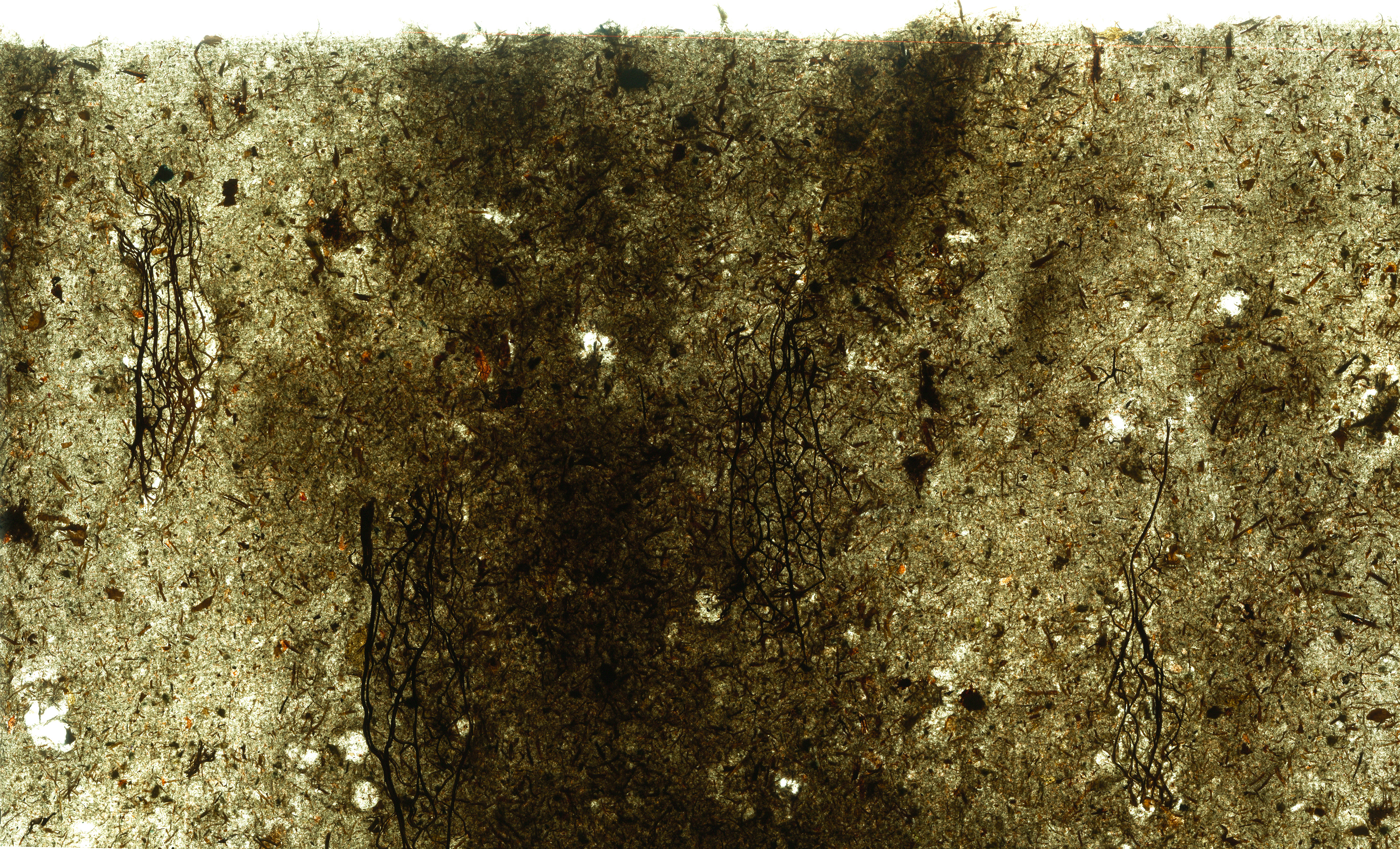
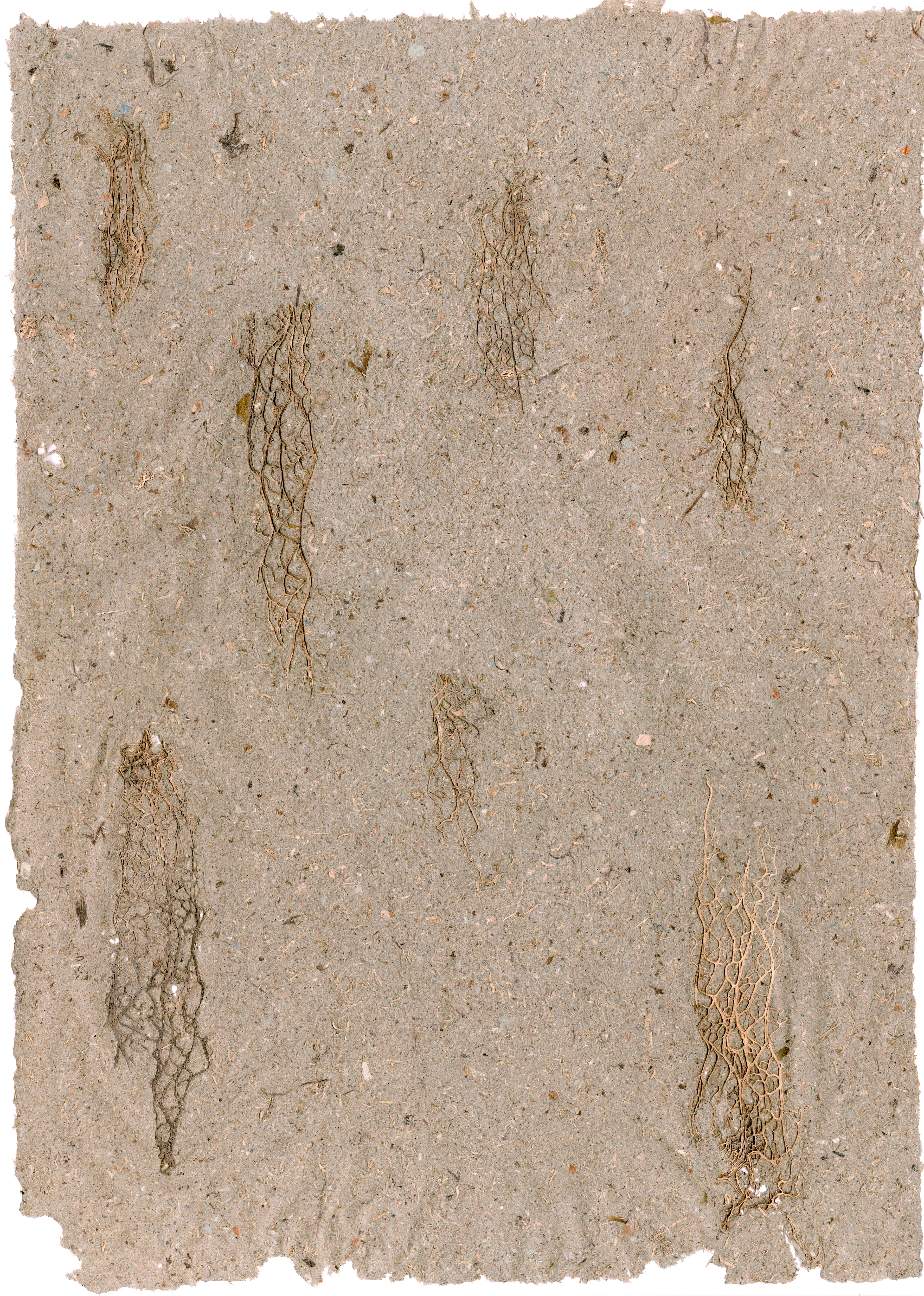
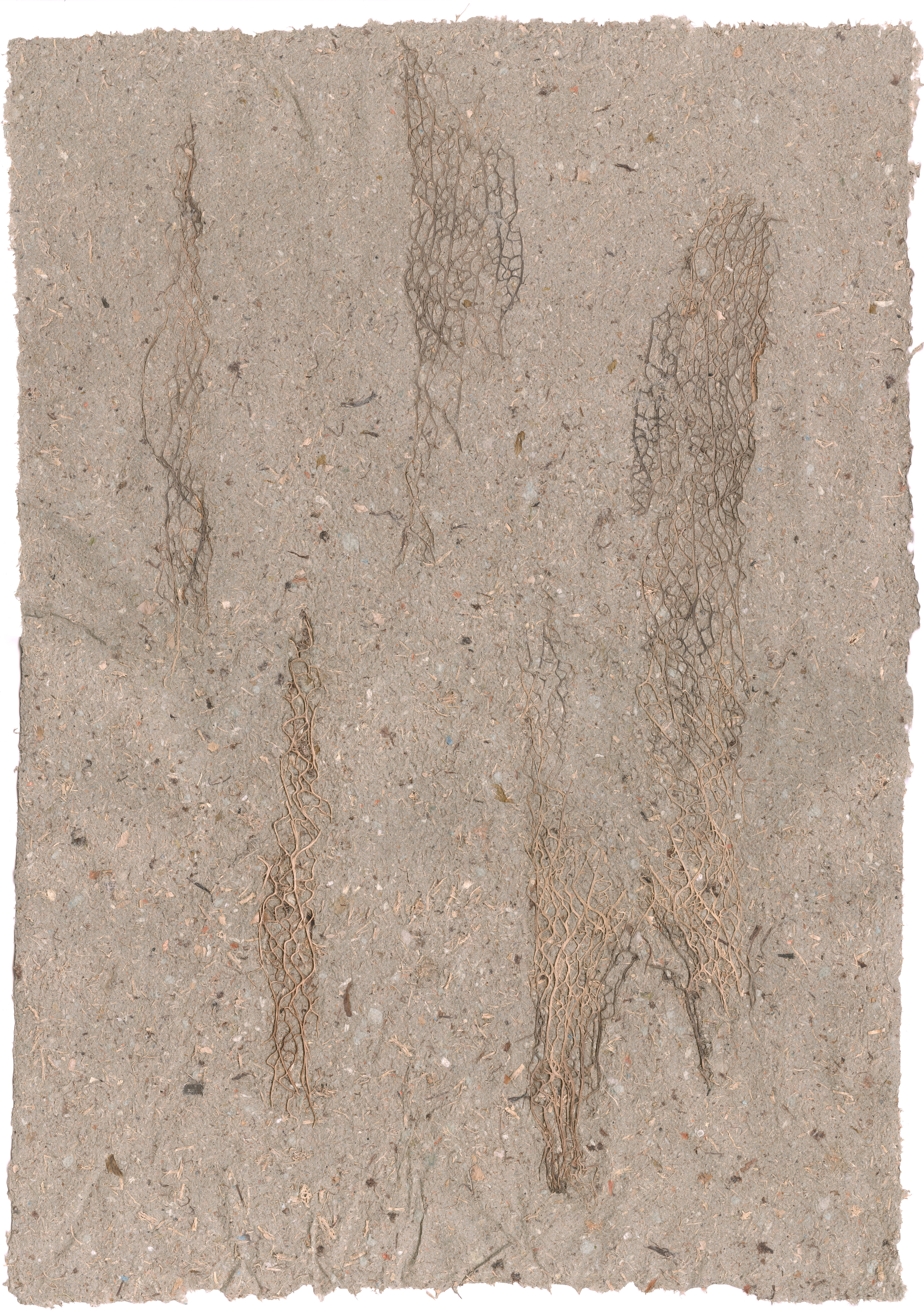
The paper is made from cactus fibres collected in Palestine from prickly pear cacti withering due to the recent spread of the cochineal insect. The fibres were beaten into pulp and also incorporated whole into the sheet design. They were made as part of Al-Wah'at's project Wild Hedges for the work Blood of the Cactus, Blood of the Tree.
At the centre of Ein Qiniya is a towering prickly pear hedge, withering in parts due to cochineal. Overlooking it from the hillside opposite is a Sufi shrine (maqam), Abu Al-Einen, with its sacred qatlab tree. While the tree appears to have little in common with the cactus, they are intimately connected through colour: the qatlab’s red bark and the cactus’s blood (cochineal) are steeped in lore. In Palestine, red carries potent associations: the blood of martyrs, sacrifice, fear, reverence, life and death.
A Palestinian myth tells a story of jealousy and violence between a father and his son: the qatlab’s bark stained red from the blood of the final mortal blow. An ancient Mixtec myth curiously also depicts fatal bloodshed between family members, resulting in the genesis of nocheztli (“blood of the cactus” in Nahuatl).
Printed here in ink made from Oaxacan cochineal on paper made from Palestinian prickly pear, these two worlds come into conversation—the blood of the cactus staining its pads once again, this time to carry myths on its beaten fibres that speak to the violence and bloodshed of colonial extraction and dispossession.
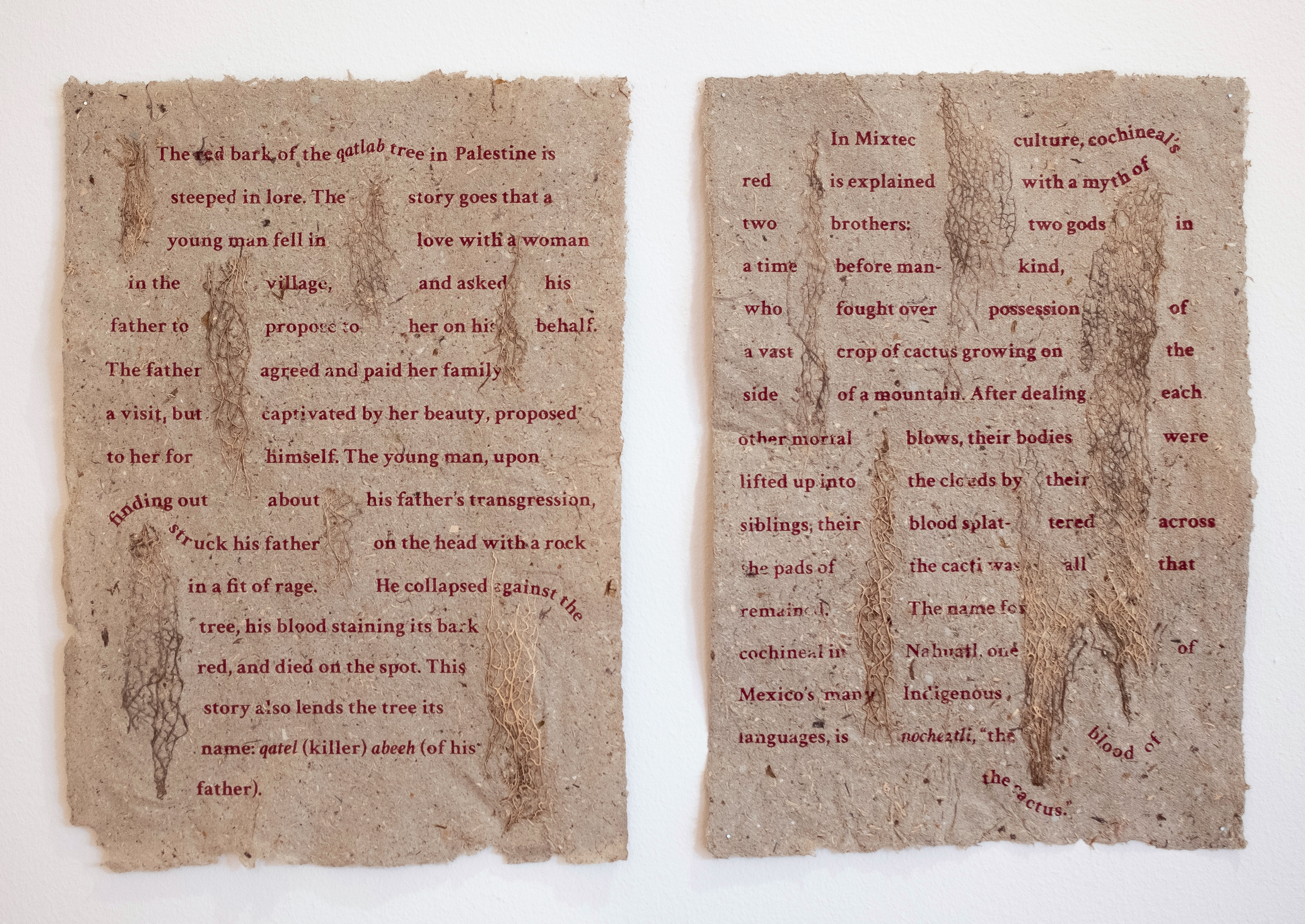
Blood of the Cactus, Blood of the Tree, Al-Wah'at Open Studio - Jan van Eyck Academie, Photo by Gabriella Demczuk, 2025