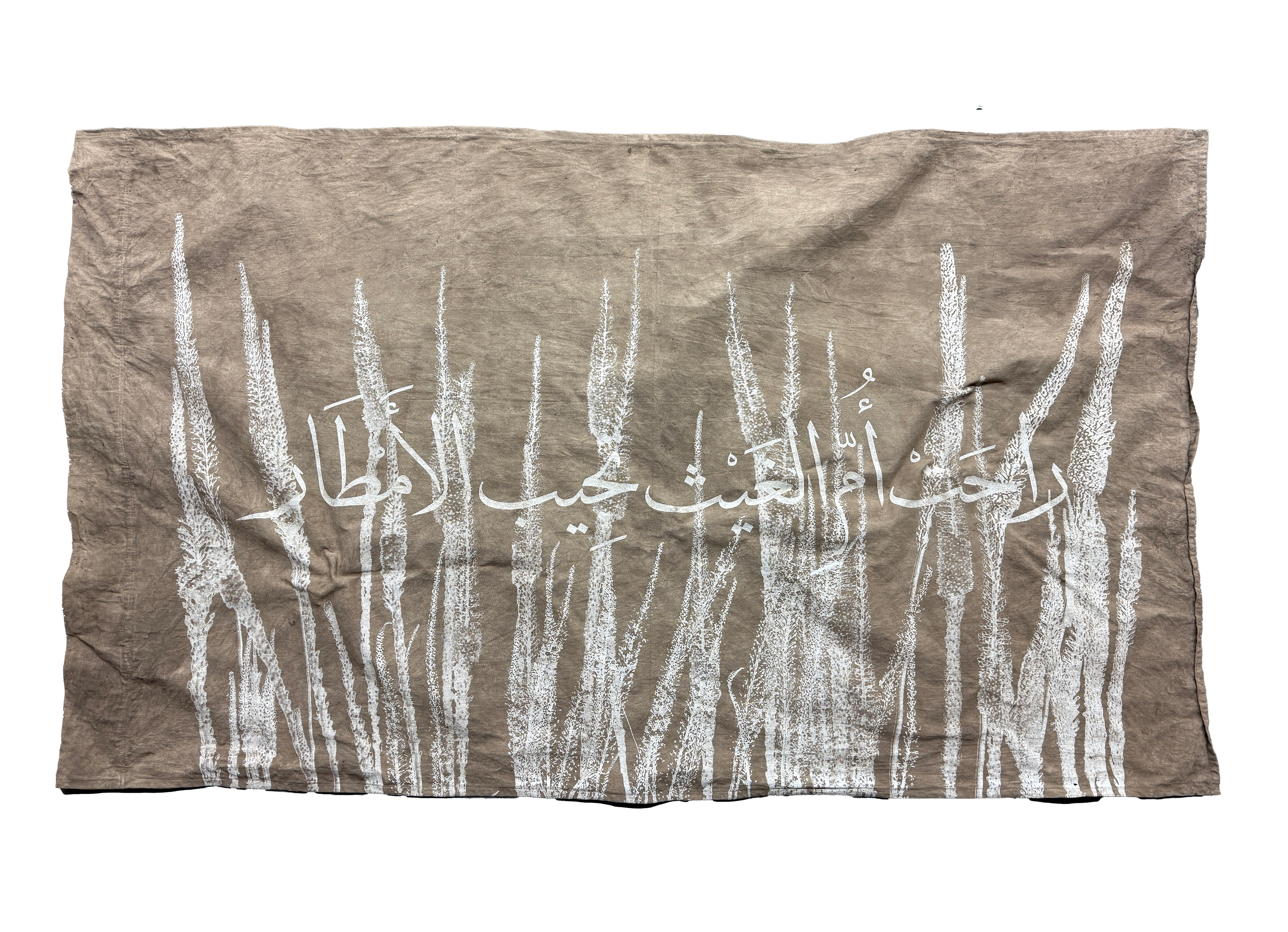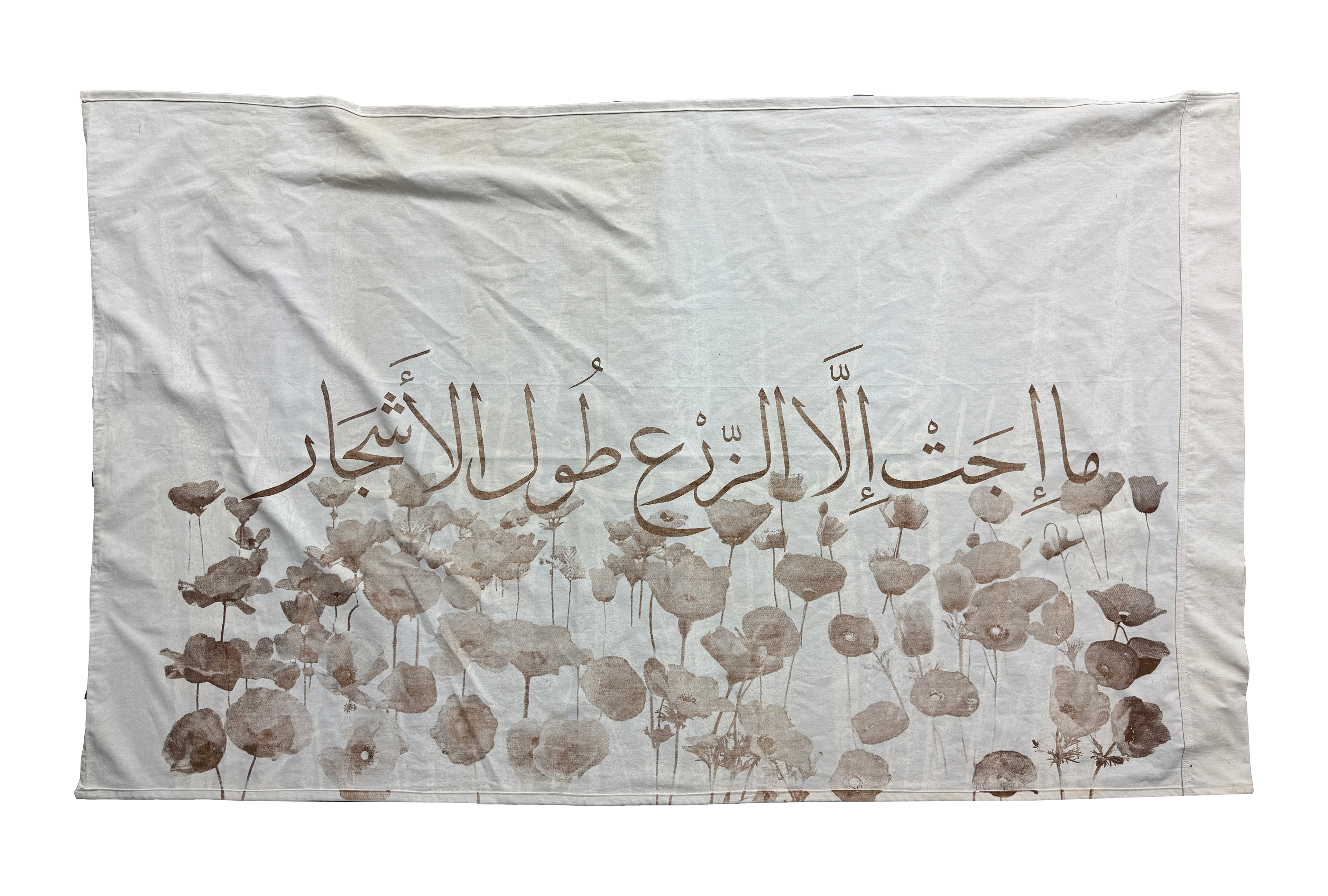
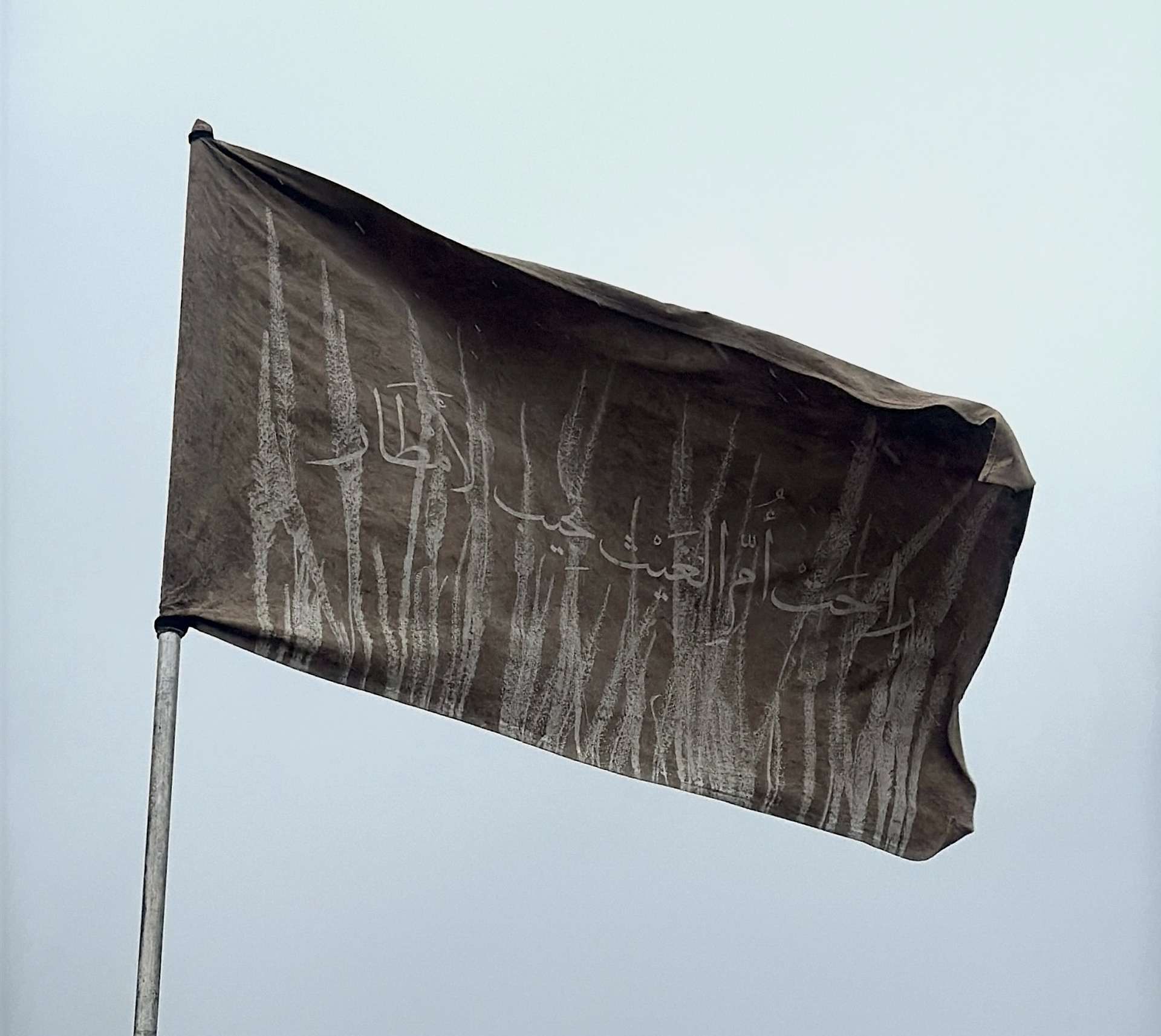
The Rain-Making Flag (راية الاستسقاء) draws on traditional rain-making rituals in which seasonal plants and communal practices call for the first rains.
In 2024, I visited the remaining lime kilns of Majdal Yaba, destroyed during the 1948 Nakba, with researcher Khalil Ghara. Along the road, tall white squill flowers grew in abundance, known locally as “the predictor of rain.” Their appearance marked a seasonal threshold long used by farmers to anticipate the coming rains.
The flag design carries symbols drawn from these seasonal indicators. Screen-printed with white ink on one side and soil-based pigment on the other, the fabric is dyed with earth and made to interact with the elements. With exposure to rain, the flag slowly transforms: one message fades as another begins to emerge.
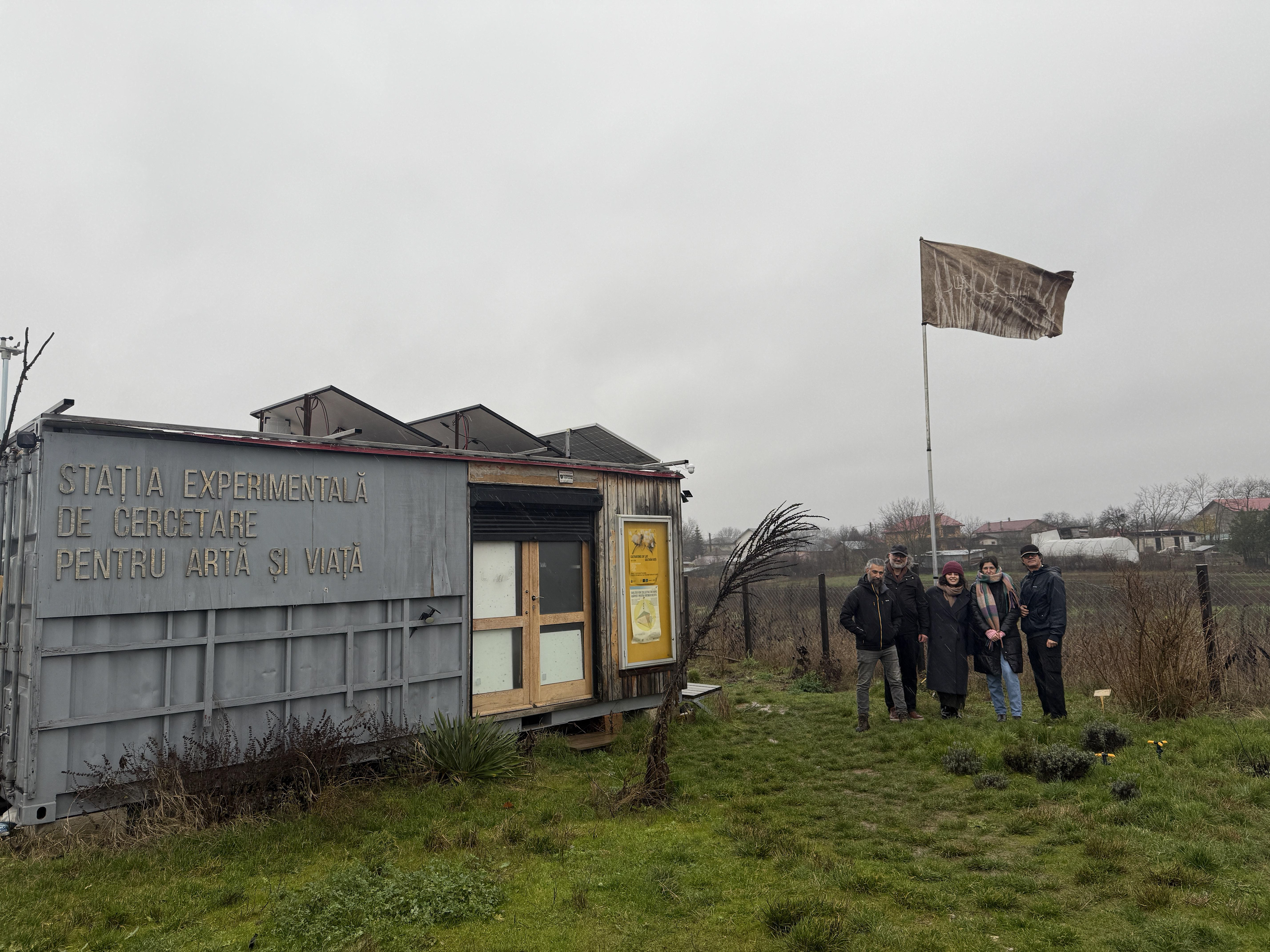
Commissioned by the Experimental Station for Research on Art and Life near Bucharest, the flag is an offering from the land of Palestine to a desertifying landscape in Romania. It was printed in collaboration with the Printing and Publishing Lab at the Jan van Eyck Academie.