By Sander van Wettum, 2026
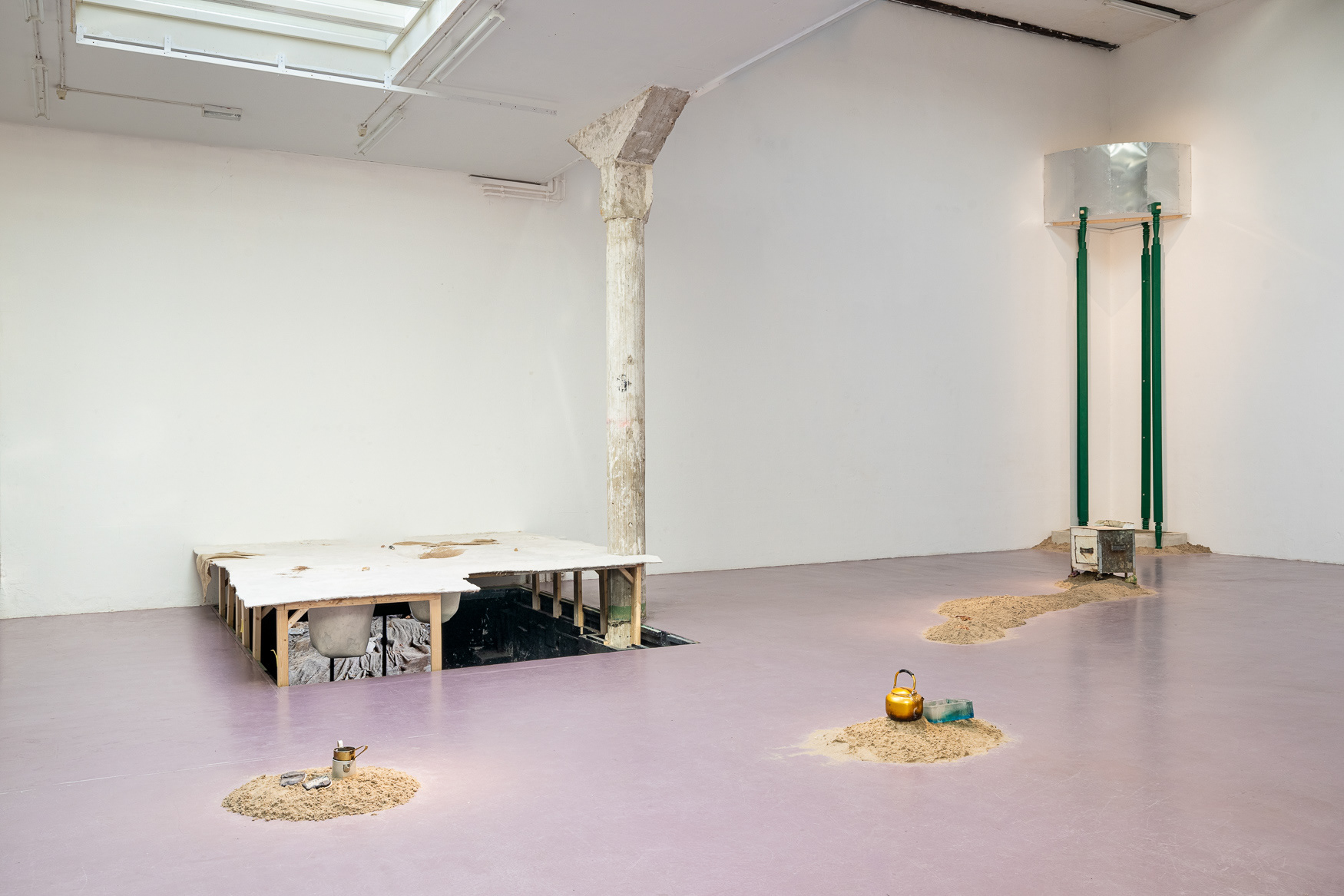
The Ground Keeps What It Holds is an installation and video work that examines burial practices in Palestine and the aftermath of their settler-colonial excavation through the material history of lime.
The project emerged from research into lime-plastered burials dating back to the Neolithic period (7000–6000 BCE), when lime was used to coat floors, skulls, and ritual objects. Produced by burning limestone, lime’s transformation from stone to paste and gradually back to stone mediated between rock and flesh, construction and decomposition, life and death. Beneath domestic lime floors, ancestors were laid to rest, binding memory and lineage to place.
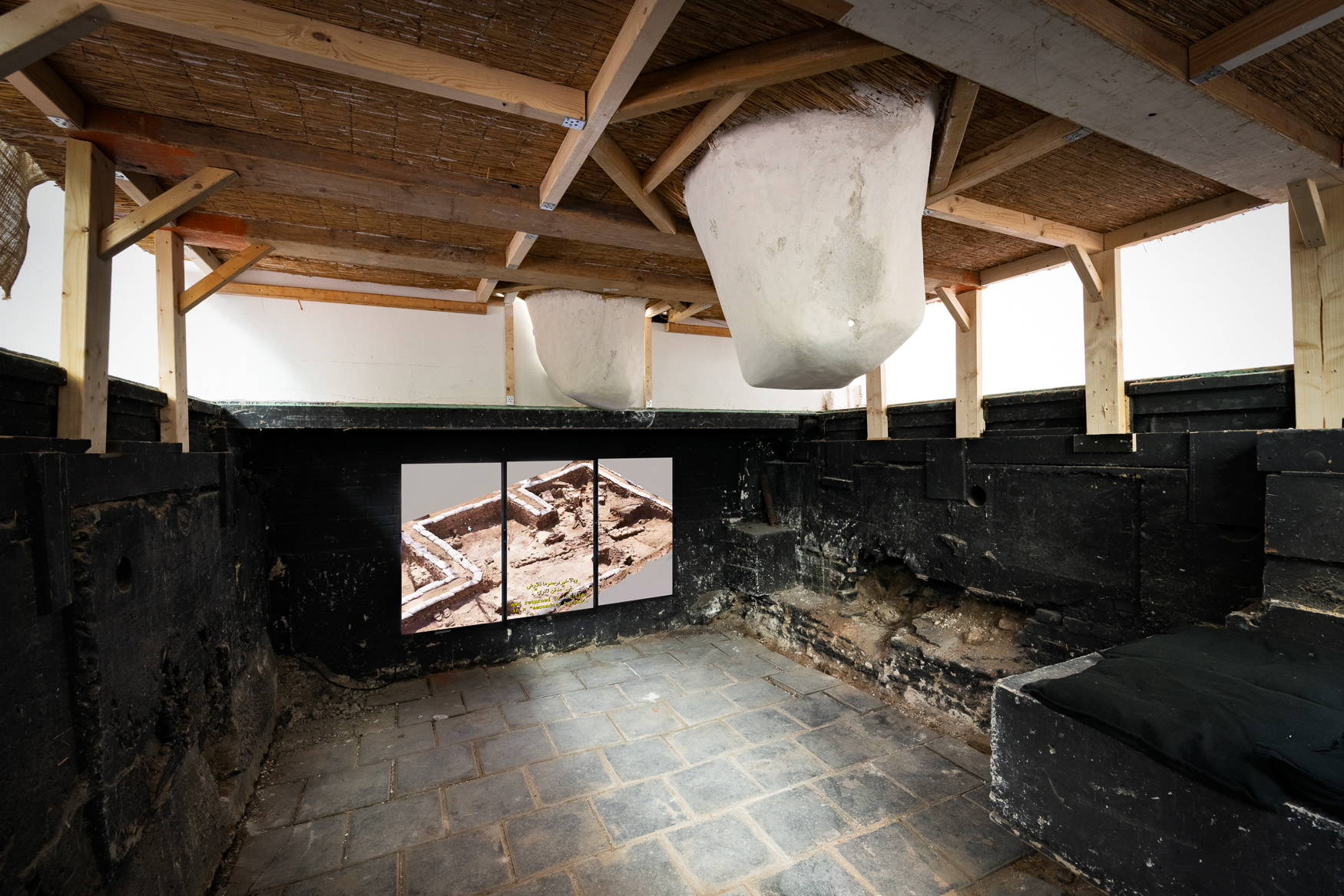
The 3-channel video installation examines how these relationships are disrupted through contemporary settler-colonial archaeology. Focusing on salvage excavations conducted prior to infrastructure projects, it considers how archaeological practice determines which histories are preserved, displaced, or erased. A key point of departure is the village of Qaloniya, destroyed during the 1948 Nakba, where excavations revealed layers ranging from prehistoric settlements and village remains to an Iron Age temple. While strata privileged within biblical narratives were preserved, other layers were removed, displaced into state archives, or destroyed to accommodate new development.
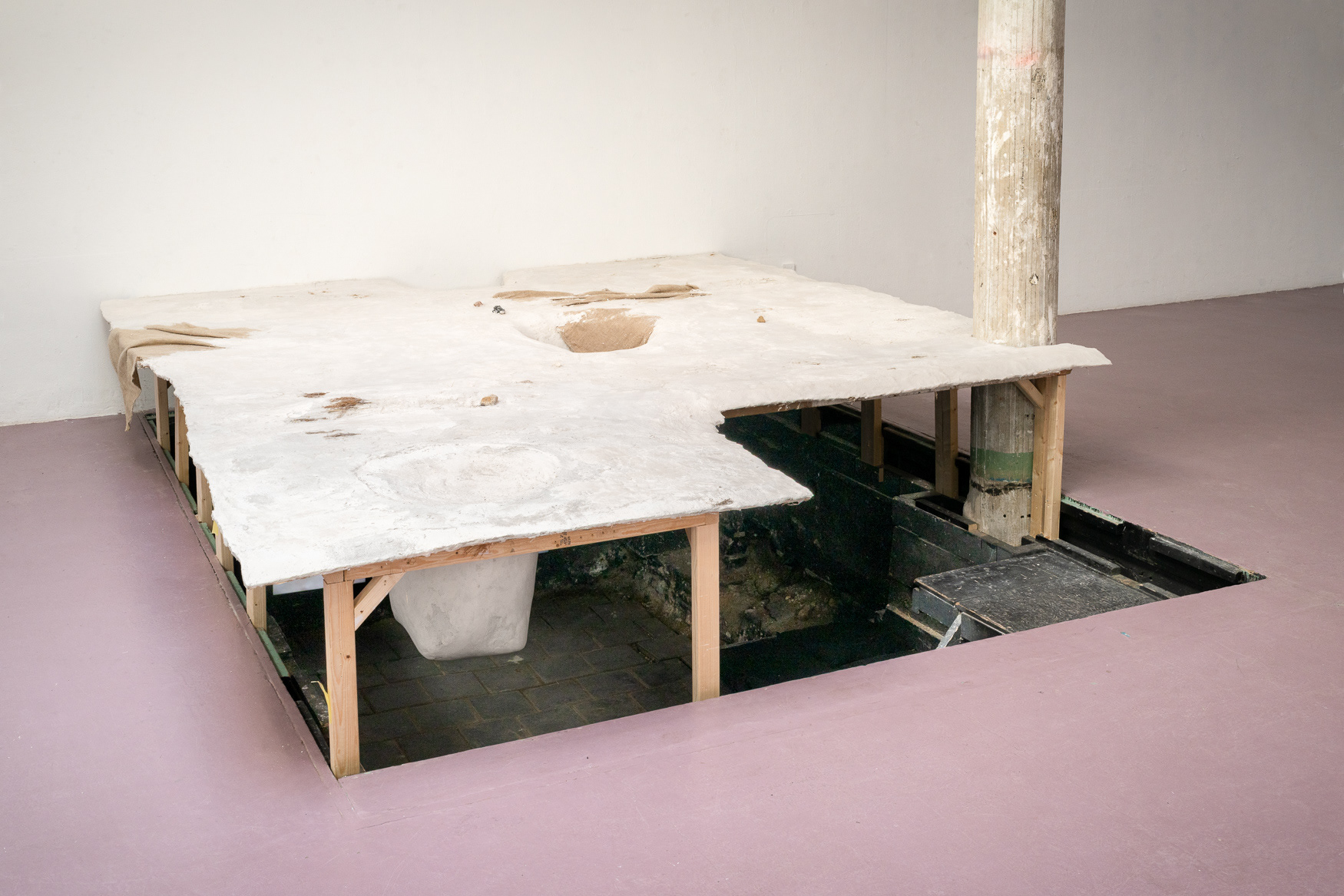
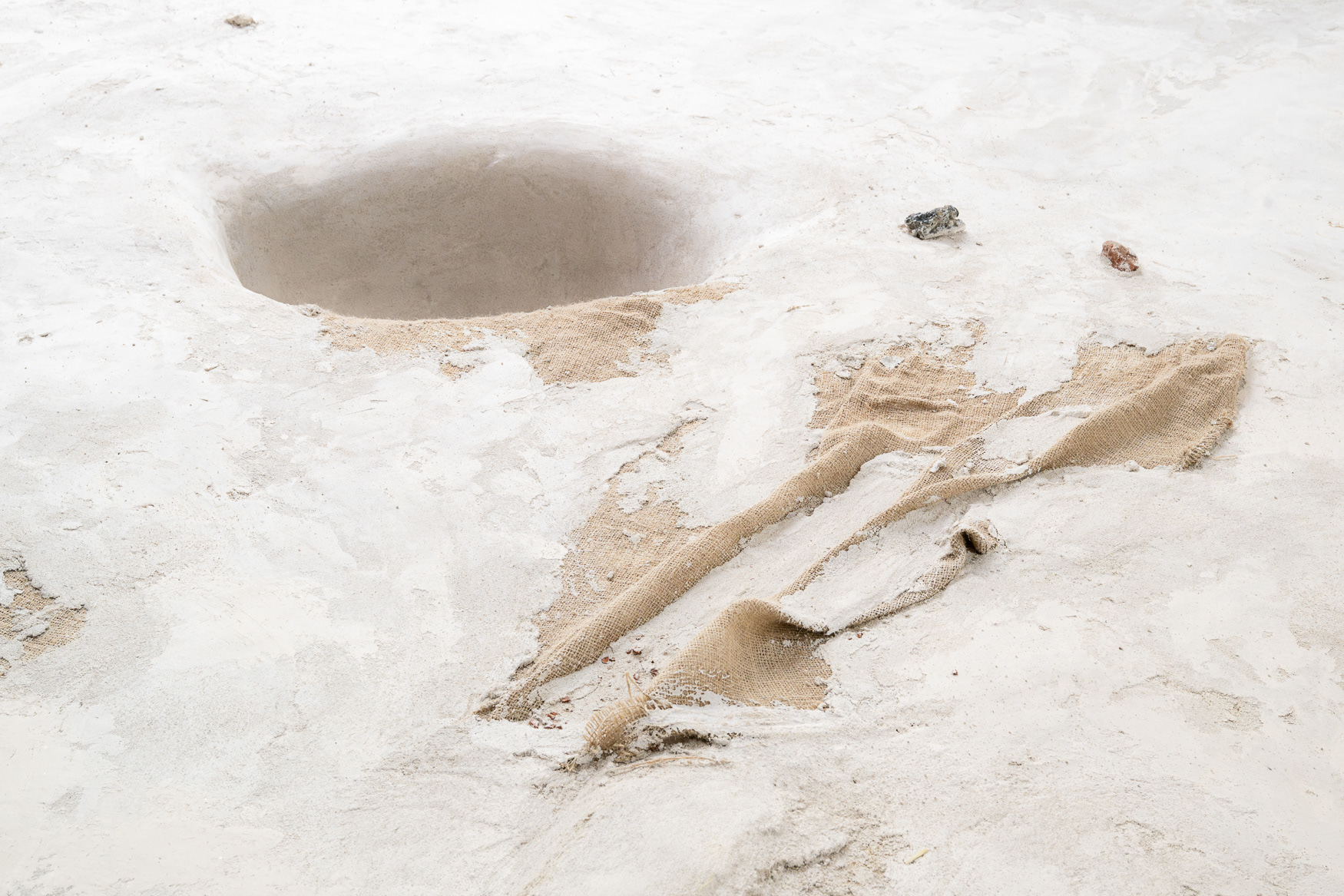
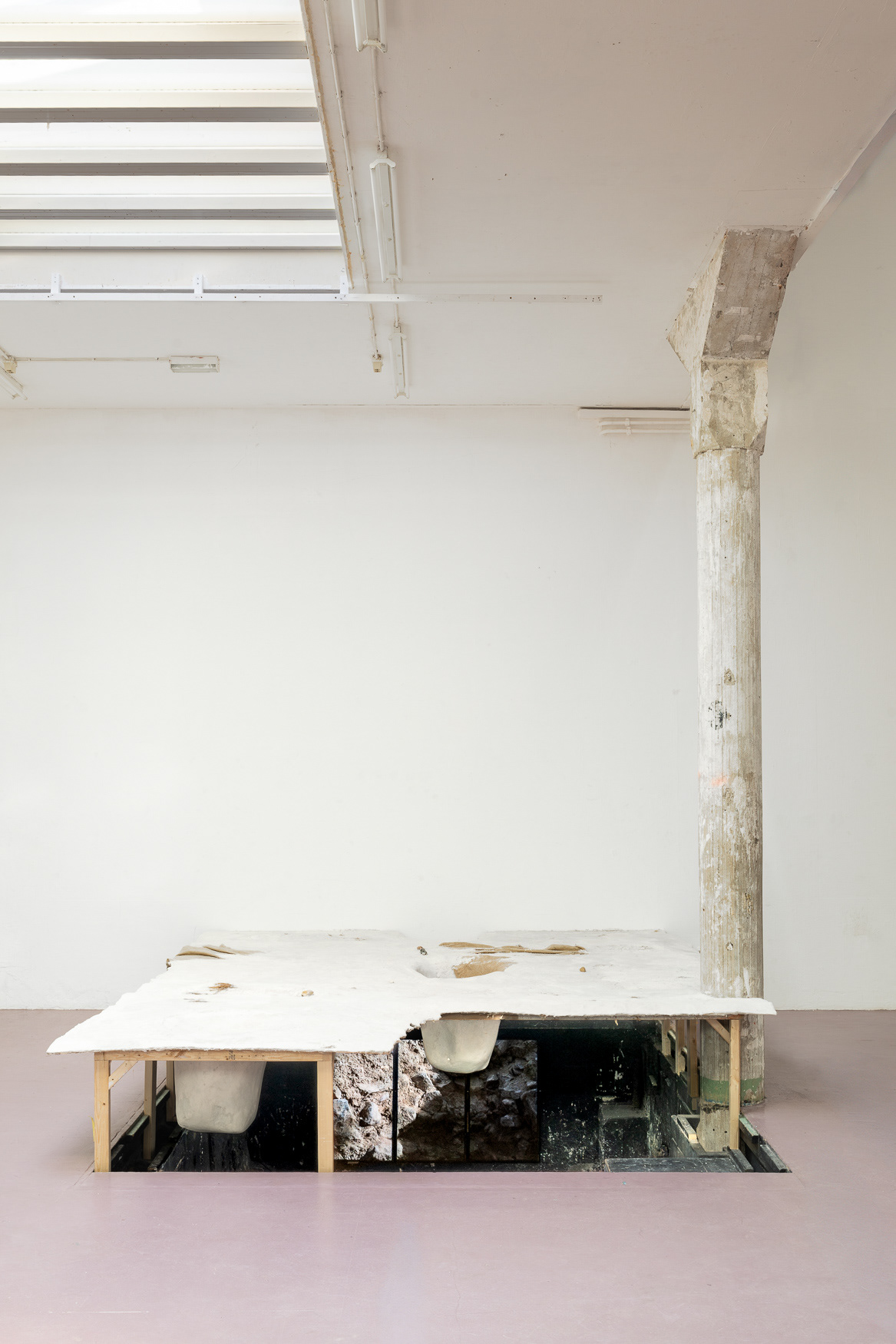
Suspended above the underground video work, a lime-plastered surface reinterprets a Neolithic burial floor excavated and subsequently removed during road construction near Qaloniya. It is rebuilt as a floor without ground, a skin without flesh. The installation was activated through a vocal performance developed from Palestinian lime-burners’ work chants, engaging the embodied knowledge and collective labor required to produce the material from which the floor is made. Fragments of these chants were also woven into the film’s soundscape.
Through lime as material, method, and metaphor, The Ground Keeps What It Holds asks: what might the earth unleash when it is denied keeping what it holds?
By Sander van Wettum, 2026
By Sander van Wettum, 2026
By Sander van Wettum, 2026
By Sander van Wettum, 2026
Credits:
Lime Skin Collaboration: Raquel Rodríguez Puebla (Architectural Skin)
Cinematography: Mohammad Bakri
Sound Design: Aimée Theriot-Ramos
Produced with the support of W139, Amarte Fonds, and Stichting Niemeijer Fonds.